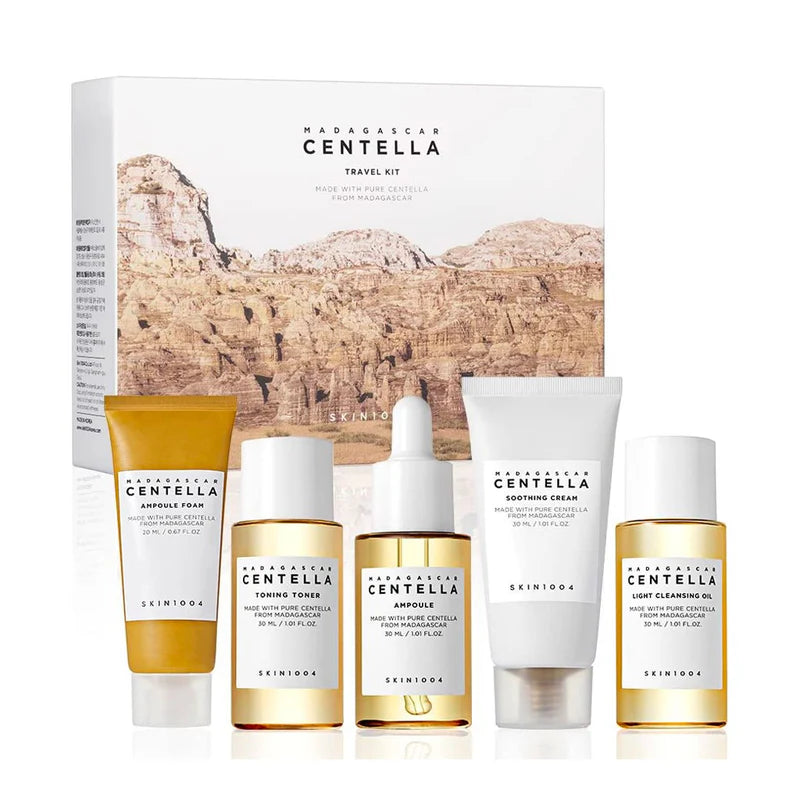

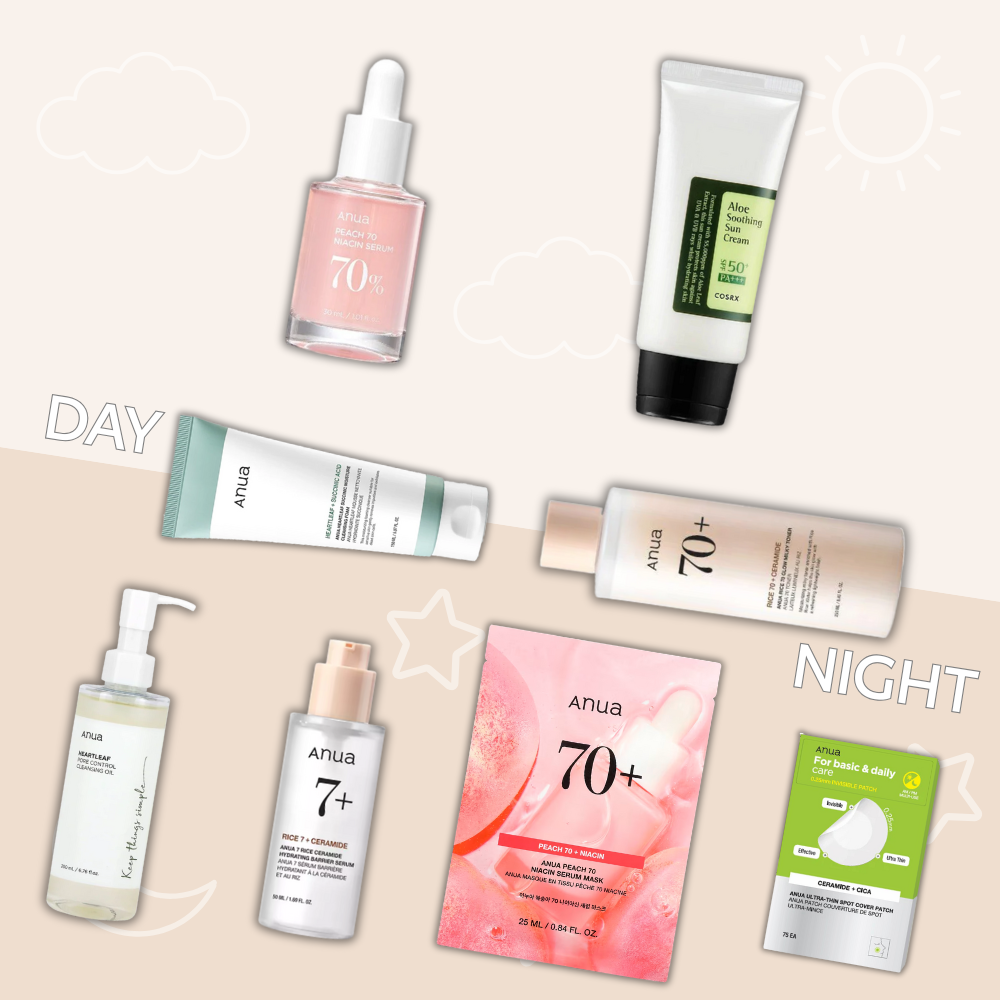

Type: Bundles
Acne-Prone (Day & Night Bundle)


Type: Bundles
Anti-Ageing (Day & Night Bundle)

Type: Essence/Serum
Anua - Azelaic Acid 10 Hyaluron Redness Soothing Serum


Type: Essence/Serum
Anua 7 Rice Ceramide Hydrating Barrier Serum


Type: Sheet Mask
Anua Birch Moisture Sheet Mask


Type: Essence/Serum
Anua Green Lemon Vitamin C Blemish Serum


Type: Cream
Anua Heartleaf 70% Intense Calming Cream


Type: Cream
Anua Heartleaf 70% Soothing Cream


Type: Sheet Mask
Anua Heartleaf 80 Moisture Soothing Ampoule Mask


Type: Essence/Serum
Anua Heartleaf 80% Ampoule


Type: Makeup Remover
Anua Heartleaf 87 Low pH Deep Cleansing Water


Type: Makeup Remover
Anua Heartleaf Pore Control Cleansing Oil


Type: Makeup Remover
Anua Heartleaf Pore Control Cleansing Oil Mild


Type: Facial Cleanser
Anua Heartleaf Quercetinol Pore Deep Cleansing Foam

Type: Facial Cleanser
Anua Heartleaf Succinic Moisture Cleansing Foam


Type: Essence/Serum
Anua Niacinamide 10% + Txa 4% Serum


Type: Essence/Serum
Anua PDRN Hyaluronic Acid Capsule 100 Serum

Type: Sheet Mask
Anua Peach 70 Niacin Serum Mask


Type: Essence/Serum
Anua Peach 70% Niacinamide Serum


Type: Toner/Lotion
Anua Rice 70 Glow Milky Toner
Recently viewed products
Our Journals

Still Using Lip Balm? You Need Real Repairing Lip Care
Most people reach for a lip balm when their lips feel dry, swipe it on, and consider the problem handled. But if your lips are constantly chapped, peeling, or cracking - even with regular balm use - the product isn't actually solving anything. Nourished lip skin feels completely different from temporarily moisturised lips. It's smooth without any product on. It doesn't crack when you smile or split in cold weather. It doesn't peel into your lipstick by midday. When lip skin is genuinely healthy, you notice it the same way you notice well-conditioned hair or properly hydrated face skin - it simply functions well without constant intervention. The difference between those two outcomes comes down to whether you're using a coating product or an actual repairing lip care treatment. Why Most Lip Balms Create a Cycle - Not a Solution There's a significant difference between a product that relieves dryness temporarily and one that engages in repairing lip care at a structural level. Most conventional lip balms sit on the surface and create a short-term moisture seal - useful in the moment, but doing nothing to help the skin rebuild its own function. True repairing lip products use ingredients that support the skin's recovery process from within the tissue: Ceramides - rebuild the lipid barrier that governs moisture retention Peptides - support the collagen structures present in thin lip skin Panthenol (Vitamin B5) - accelerates tissue repair and binds moisture to the skin Shea butter and plant oils - provide occlusive protection while supplying essential fatty acids Hyaluronic acid - draws moisture into the lip skin from deeper layers When these ingredients work together in a well-formulated product, the improvement isn't cosmetic. Lips feel genuinely different because the skin is functioning better, not just coated. BEST lIP CARE PRODUCTS What Chronically Dry Lips Are Actually Telling You Dry, peeling lips aren't always just a dehydration issue. In many cases they signal a compromised skin barrier - the same way dry patches on your cheeks or forehead do. The lip area has no oil glands whatsoever, which makes it one of the most barrier-dependent areas on the face. Without its own oil production, it relies entirely on its lipid barrier and external products to maintain moisture. This is why basic wax-and-petrolatum balms often create a dependency cycle. The skin gets a surface coating, stops contributing to its own moisture balance, and becomes reliant on constant reapplication. Breaking that cycle requires shifting from a coating agent to an actual treatment product. The K-Beauty Approach to Lip Health - Treating Lips Like Skin Korean skincare approaches lip care with the same layered, ingredient-focused mindset it applies to face skin. Rather than a single balm that does everything moderately, K-Beauty breaks lip care into targeted steps. Overnight lip masks are thick, stay-on formulas applied before bed. They deliver intensive moisture and barrier-repairing ingredients while you sleep, using ingredients like honey, propolis, ceramide complexes, and vitamin E. The result by morning is noticeably softer, plumper lip skin with zero active effort. Tinted lip treatments provide a light wash of colour while simultaneously delivering hydrating and protective ingredients. They work as a daily alternative to traditional lipstick for people who want coverage without sacrificing care. Exfoliating lip scrubs use gentle sugar or fruit enzyme formulas to remove flaky skin before treatment products are applied. Exfoliating once a week before applying a mask dramatically improves how well the active ingredients absorb - flaky skin sitting on top acts as a barrier. Using all three in rotation - scrub weekly, treatment daily, mask overnight - is what creates the kind of lip health that eventually becomes effortless to maintain. Building a Lip Repair Routine That Produces Real Results Rebuilding lip skin takes consistency, not complexity. Here's a practical daily structure: Morning: Apply a nourishing lip treatment or tinted balm with SPF protection. The sun damages lip skin considerably, and most people completely skip sun protection for this area. Daytime: Reapply your lip treatment as needed. Avoid licking your lips - saliva actively breaks down the lip's natural barrier faster than almost anything else. Evening: If your lips are flaky, use a scrub gently before your skincare routine. Follow with a generous layer of overnight lip mask or a ceramide-rich balm. Let it absorb and repair while you sleep. Weekly: Apply a more intensive overnight mask treatment and leave it on until morning for a deeper repair session. Within two to three weeks of following this consistently, most people notice a genuine change - not just in appearance, but in how their lips feel without any product at all. Where to Find Products That Are Actually Formulated to Deliver This If you're ready to move past basic lip balms and into products with real formulation depth, a well-curated K-beauty online store is the most efficient place to start. The advantage of shopping through a specialist retailer is that the curation has already done the filtering work - you're not sorting through generic options alongside clinical-grade K-Beauty products with no context. Pretty Skin Cosmetics is an Australian-based K-Beauty retailer carrying lip care from brands like ANUA, Beauty of Joseon, and COSRX - brands that apply the same ingredient rigour to lip products as they do to their face serums and essences. Their platform is organised by skin concern, making it straightforward to find the right lip care product for your specific situation. The Standard Healthy Lip Skin Should Actually Meet Healthy lip skin doesn't need constant reapplication to feel comfortable throughout the day. It doesn't crack in cold air, split when it's windy, or flake into products applied on top. And it holds onto hydration between applications rather than feeling tight and parched within an hour. That's not an impossible standard. It's what lip skin is capable of when it's genuinely repaired and maintained - and it's entirely achievable with the right products and a routine that stays consistent. FAQs Q1: How long does it take to repair chronically dry lips? Ans: For most people, two to four weeks of a consistent repair routine produces a noticeable improvement in texture and comfort. Severely compromised lip skin may take six to eight weeks of daily care to fully recover. Q2: Is it safe to exfoliate lips regularly? Ans: Yes - once a week is the right frequency for most people. Use a gentle formula and never apply excessive pressure. Over-exfoliating the thin lip skin can cause irritation and set back the repair process. Q3: Can I use my regular face moisturiser on my lips in the meantime? Ans: You can use it as a temporary measure, but dedicated lip treatments are considerably more effective. Lip skin is structurally different from facial skin and responds far better to formulas specifically designed for it.
Learn more
How to Build a Skincare Routine for Your Skin Type
Good skin is not magic. It is not luck. It is just the right steps, done every day. Whether your skin is dry, oily, or somewhere in between, this guide will help you. Let's make it easy. Let's make it fun. Why Does Your Skin Need a Routine? Your skin works hard every single day. It fights dust. It fights the sun. It fights stress. And it never takes a day off. So it needs your help. A good skincare routine is like a best friend for your face. It keeps your skin clean, soft, and glowing. People who follow a routine see big changes fast. We are talking about smoother skin. Fewer pimples. A brighter face. Sounds good, right? First, Know Your Skin Type Before you buy anything, you need to know your skin type. This one step saves you time and money. Oily SkinDoes your face look oily by noon? Do you get pimples often? That's oily skin. You need light products. Nothing too heavy. Dry SkinDoes your face feel tight after washing? Do you see dry patches? That's dry skin. You need a rich moisturiser. Drink more water, too. Combination SkinOily nose and forehead? Dry cheeks? Welcome to combination skin. The most common type. Balance is your goal. Sensitive SkinDoes your skin get red easily? Do products sting or itch? That's sensitive skin. You need gentle, simple products. Less is always more. 1. Step One: Cleanse Like You Mean It Every good routine starts with a clean face. Washing your face removes dirt, oil, and makeup. It gives your other products a clean surface to work on. But here is the thing. Most people wash their faces wrong. They use soap. They scrub hard. They rinse with hot water. All wrong moves. Use a gentle hydrating face wash instead. It cleans your face without stripping it dry. Lukewarm water is best. Pat your face dry; never rub. A good hydrating face wash keeps your skin's natural balance. Your skin stays soft. It does not feel tight. It does not look red. This is the first and most important step of your whole routine. Quick Tip Wash your face twice a day, morning and night. Washing more than that can dry out your skin. Washing less means dirty skin all day. Twice is the magic number. BEST CLEANSERS SERUMS 2. Step Two: Tone, Then Treat After cleansing, a toner is your next move. It balances your skin's pH. It prepares your skin to absorb the next products better. Now comes the exciting part, serums. Serums are small but powerful. They go deep into your skin. They target specific problems. Want to glow? Get a brightening serum. A good brightening serum fades dark spots over time. It evens out your skin tone. It gives you that glass-skin look everybody wants. Apply serum with gentle pats. Do not rub. Let it sink in fully before the next step. 3. Step Three: Moisturise Every Single Day Even oily skin needs moisturiser. Yes, really. When you skip moisturiser, your skin panics. It makes more oil to protect itself. That makes things worse, not better. Pick the right one for your type. Oily skin loves a light gel moisturiser. Dry skin loves a rich cream. Sensitive skin loves fragrance-free formulas. Moisturiser locks in all the good work from your cleanser and serum. Without it, your routine is only half done. 4. Step Four: Sunscreen Is Non-Negotiable The sun is the number one reason skin ages fast. Sunscreen is your shield. Apply it every morning. Even on cloudy days. Even indoors near windows. UV rays do not care about clouds. Use SPF 30 at minimum. SPF 50 is even better. Reapply every two hours if you are outside. This one step prevents wrinkles, dark spots, and uneven skin tone better than any other product on earth. The Magic of Korean Skincare Australia Lovers Are Obsessed With Have you heard about the K-beauty wave? It is huge right now. And for good reason. Korean skincare Australia fans have discovered something beautiful. Korean products focus on hydration first, glow second, and treatment third. This order just makes sense. The famous 10-step Korean routine might sound like too much. But you do not need all 10 steps. Start with the basics. Cleanser, toner, serum, moisturiser, sunscreen. That is it. Build from there as your skin needs more. The secret of Korean skincare Australia enthusiasts swear by? Patience. Results take time. Stick with your routine for at least four to six weeks before judging any product. Your skin needs time to adjust and improve. Did You Know? Korean skincare products are often packed with natural ingredients like snail mucin, green tea, and rice extract. These are gentle. They are effective. And they work for almost every skin type. Night Routine vs Morning Routine Your skin behaves differently at night. It goes into repair mode. This is when you give it the good stuff. At night, skip the sunscreen. Add a richer moisturiser or a night cream instead. You can also add retinol or a stronger treatment serum at night. These work best while you sleep. The morning routine is about protection. The night routine is about repair. Both matter equally. Your Best Skin Starts Today You do not need expensive products. You do not need a complicated routine. You just need the right steps, done every day, with love and patience. Start simple. Stay consistent. Watch your skin transform FAQs Q1. How long before I see results from my skincare routine?Ans: Give it four to six weeks. Your skin renews itself every 28 days or so. You need at least one full cycle to see real change. Be patient. Stay consistent. Results will come. Q2. Can I use a brightening serum every day?Ans: Yes! Most brightening serums are safe for daily use. Start with once a day. See how your skin feels. If all is good, you can use it morning and night. Always follow with moisturiser and sunscreen during the day. Q3. Is Korean skincare suitable for sensitive skin?Ans: Absolutely. Korean skincare is actually known for being gentle and soothing. Many K-beauty products are made for sensitive skin. Always check the ingredient list first and patch-test new products before using them on your full face. Q4. Do I really need a separate eye cream?Ans: Not necessarily. If you are just starting out, your regular moisturiser is fine around the eyes too. Eye cream becomes more useful as you get older or if you have specific concerns like dark circles or puffiness. Q5. What is the right order to apply skincare products?Ans: Go from thinnest to thickest. Start with the most watery products and end with the heaviest. So: cleanser → toner → serum → moisturiser → sunscreen (morning only). Simple, right? Q6. Can a hydrating face wash help with acne-prone skin?Ans: Yes! Many people think acne means they need a harsh, drying cleanser. Wrong. A gentle, hydrating face wash cleans well without making skin overreact. Less irritation often means fewer breakouts over time. Q7. How many products do I actually need to start?Ans: Just three. A cleanser, a moisturiser, and sunscreen. That is your starter kit. Once you have that locked in, add a serum next. Keep it simple at the beginning. Do not overwhelm your skin with too many new things at once.
Learn more
Niacinamide vs Vitamin C: Which One Is Right for Your Skin?
78% of Australians report uneven skin tone as their top skincare concern. Yet most people do not know which active ingredient actually fixes it. Niacinamide and Vitamin C are both powerful. But they work differently. Choosing the wrong one wastes time and money. This guide breaks it all down clearly. What Is Niacinamide? Niacinamide is a form of Vitamin B3. It is water-soluble. It works inside the skin's surface layers. It blocks the transfer of melanin to skin cells. Melanin is the pigment that causes dark spots. Fewer transfers mean fewer spots over time. Niacinamide also reduces redness. It strengthens the skin barrier. It controls excess oil production, too. This makes it suitable for almost every skin type. Sensitive skin? Fine. Oily skin? Works well. Dry skin? Still effective. Niacinamide is stable. It does not break down in light or heat. It does not need to be stored specially. This makes it a very practical active ingredient for daily use. BEST NIACINAMIDE SERUMS What Is Vitamin C? Vitamin C is an antioxidant. Its scientific name is ascorbic acid. It fights free radicals. Free radicals are unstable molecules that damage skin cells. Vitamin C stops that damage. It also blocks an enzyme called tyrosinase. Tyrosinase triggers melanin production. Blocking it means less pigment forms in the first place. Vitamin C supports collagen synthesis, too. Collagen keeps skin firm and plump. Less collagen means more fine lines. Vitamin C helps maintain healthy collagen levels. This is why it is popular in brightening skincare routines targeting both dullness and early signs of ageing. However, Vitamin C is unstable. It oxidises when exposed to air and light. An oxidised Vitamin C product turns orange or yellow. It loses its effectiveness fast. Packaging matters enormously with Vitamin C products. BEST VITAMIN C SERUMS How Each One Targets Skin Brightness Brightening skincare is not just about making skin lighter. It is about achieving an even, radiant, and healthy-looking complexion. Niacinamide works gradually. It interrupts the melanin delivery pathway. Results appear over 8 to 12 weeks of consistent use. It is gentle. It rarely irritates. It pairs well with most other actives. Vitamin C works at the source. It stops pigment from forming. It also gives a more immediate glow. The antioxidant action means skin looks brighter within days. Long-term use delivers deeper correction of dark spots and post-acne marks. Both ingredients are clinically studied. Both are proven. But they target brightness through different biological mechanisms. Which Skin Types Benefit Most? Skin type matters when choosing between these two actives. Niacinamide suits: oily skin, acne-prone skin, sensitive skin, and rosacea-prone skin. It calms inflammation. It does not trigger breakouts. It is non-comedogenic. Vitamin C suits: dull skin, sun-damaged skin, ageing skin, and skin with stubborn dark spots. It delivers antioxidant protection. It boosts radiance quickly. If your skin is reactive or easily irritated, start with niacinamide. If your concern is dullness and sun damage, reach for Vitamin C first. Can You Use Both Together? Yes. Niacinamide and Vitamin C can be used together. There was an old concern that combining them caused a reaction called niacin flush. Modern research has largely dismissed this. The concentrations used in skincare products are too low to cause this reaction. A simple approach: apply Vitamin C in the morning for antioxidant protection. Apply niacinamide in the evening for repair and barrier support. Alternatively, look for formulas that already combine both. A well-formulated Korean serum may already contain both actives in stable, effective concentrations. Korean formulation science is particularly advanced in combining actives without irritation. Where Does a Hydrating Toner Fit In? A hydrating toner is not just about moisture. It prepares the skin. It balances pH levels after cleansing. It allows actives like niacinamide and Vitamin C to absorb more efficiently. Apply your hydrating toner before your serum. This creates a hydrated base. Actives penetrate more deeply into a well-hydrated skin surface. Skipping this step reduces the effectiveness of everything applied after. Look for toners containing hyaluronic acid, panthenol, or beta-glucan. These ingredients draw water into the skin and hold it there. How to Build a Complete Brightening Routine A complete routine does not need to be complicated. It needs to be consistent. Morning routine: Cleanser, hydrating toner, Vitamin C serum, Korean moisturiser, SPF. This sequence delivers antioxidant protection and hydration throughout the day. Evening routine: Cleanser, hydrating toner, niacinamide serum, Korean moisturiser. This sequence focuses on repair, brightening, and barrier restoration overnight. SPF is non-negotiable. Without sun protection, no brightening active will deliver lasting results. UV exposure triggers fresh pigmentation daily. All the actives in the world cannot outpace daily UV damage. What Results Should You Realistically Expect? Skincare actives are not instant fixes. Realistic expectations matter. With Vitamin C: expect a visible glow within 2 to 4 weeks. Spot fading takes 8 to 12 weeks minimum. With Niacinamide: expect pore refinement and oil control within 4 weeks. Significant tone evening takes 10 to 12 weeks. Consistency is the only variable you fully control. Using an active twice a week delivers a fraction of the results of daily use. Commit to the routine. Track progress with photos every four weeks. Why Pretty Skin Cosmetics Is Worth Knowing? Pretty Skin Cosmetics is an Australian-based retailer curating authentic Korean skincare for modern routines. The brand carefully selects products that genuinely work without overcomplicating daily skincare. Their range includes brightening serums, hydrating toners, and skin-barrier-supporting moisturisers. Everything is chosen with real skin concerns in mind. Pretty Skin Cosmetics is building a community of people who want considered, effective, and fuss-free skincare. If you are ready to take your routine seriously, Pretty Skin Cosmetics is the place to start. FAQs Q1. Can I use niacinamide every day? Ans: Yes. Niacinamide is gentle enough for twice-daily use. Most clinical studies use a 5% concentration applied morning and evening. Start with once daily if your skin is sensitive. Q2. What percentage of Vitamin C is effective? Ans: A concentration between 10% and 20% is clinically effective. Below 10% shows minimal results. Above 20% increases irritation risk without a significant added benefit. 15% is a reliable starting point. Q3. Why does my Vitamin C serum turn orange? Ans: Oxidation. Ascorbic acid degrades when exposed to light and air. An orange or brown serum has lost most of its potency. Store Vitamin C products in a dark, cool place. Replace them every three to four months once opened. Q4. Is a Korean serum better than a standard serum for brightening? Ans: Korean serum formulations often combine multiple brightening actives in a single, lightweight formula. They are designed for layering. This multi-active approach can deliver faster, more comprehensive results compared to single-active formulas. Q5. Do I need a separate moisturiser if my serum is hydrating? Ans: Yes. A serum delivers actives. A moisturiser seals them in. Even the most hydrating serum does not replace a Korean moisturiser. The moisturiser forms a protective film over the skin. It locks in everything applied underneath it.
Learn more